
How to Start SIP with ₹500 in India (Beginner’s Guide) | Wealth Wisdom

Beginner starting SIP with ₹500 in India

How to Start a SIP with ₹500 in India (Beginner’s Guide)

Think ₹500 Is Too Small to Invest? Think Again.

Yes, you can start a SIP in India with just ₹500 per month. A Systematic Investment Plan (SIP) allows you to invest a fixed amount regularly in mutual funds, helping you build long-term wealth through disciplined investing and the power of compounding. 

One of the reasons people delay investing is that they think they need a lot of money to start. Many young professionals believe investing is for people who earn a lot, like those with six-figure salaries, business owners with extra cash, or experienced investors who know the stock market.

As a result, thousands of Indians wait for years for the “time” to start investing. They tell themselves they will start investing after they get a raise, pay off a loan, change jobs, or save money. Unfortunately, waiting often costs them something more valuable than money. Time.

The truth is that investing has become easier than ever. Thanks to Systematic Investment Plans (SIPs) anyone can start investing with ₹500 per month. This amount may seem small now. When invested regularly over many years it can grow into a big amount.

Starting with ₹500 also helps you develop the habit of investing. Financial success is rarely achieved through one-time actions. Instead it’s usually the result of disciplined decisions made consistently over a long period.

In 2026 you can open an investment account complete KYC verification and start a SIP online in a time. You no longer need to know a lot about finance have a lot of money or have a relationship manager to start investing.

Whether you are a graduate, a salaried employee earning between ₹20,000 and ₹50,000 per month a freelancer or someone who has never invested before this guide will explain everything you need to know about starting a SIP with ₹500 in India.

By the end of this article you will understand how SIPs work, why they are popular how compounding helps small investments grow, how to choose your mutual fund and the exact steps required to start your investment journey with ₹500.

  • You will learn how to start investing with SIPs.
  • SIPs are popular among Indians.
  • ₹500 Can grow into an amount, with SIPs.
  • You can start investing with ₹500 today.
  • SIPs help you develop the habit of investing.
  • Investing with ₹500 is easy and accessible.

What Is a SIP and Why Has It Become So Popular?

SIP stands for Systematic Investment Plan. A Systematic Investment Plan is a way to invest in funds. You put a fixed amount of money into funds at regular times like every month.

You do not have to wait until you have a lot of money to start investing. A Systematic Investment Plan lets you invest amounts of money all the time. This makes it easier for people to invest in funds.

Think of it like a subscription. Like how you pay for a streaming service every month a Systematic Investment Plan puts a fixed amount of money into a mutual fund every month.

For example if you choose to invest ₹500 every month in a Systematic Investment Plan that amount of money will be taken out of your bank account on a day and put into your mutual fund. This keeps happening until you decide to stop or change your investment.

Systematic Investment Plans are very popular now. This is because they help solve some problems that people have when they start investing.

First Systematic Investment Plans help people be more careful with their money. Since the investment is made automatically you are less likely to spend the money on something

Second Systematic Investment Plans reduce the stress of trying to figure out when to invest in the stock market. Even people who have been investing for a time have trouble knowing when to invest. Systematic Investment Plans solve this problem by investing your money at times no matter what the market is doing.

Third Systematic Investment Plans make it possible for anyone to invest. Whether you can invest ₹500 or ₹50,000 every month you can use a Systematic Investment Plan to invest your money.

Over the ten years Systematic Investment Plans have changed the way people in India invest their money. Now millions of people use Systematic Investment Plans to save money for when they retire for their childrens education to buy a home to travel and to be financially independent.

The best thing, about investing in a Systematic Investment Plan is that it is simple. Of trying to guess what the market will do you can just invest your money regularly and let time help you.


Can You Really Start Investing With Just ₹500?

One of the common questions people have when they start investing for the first time is whether ₹500 is enough to make a difference.

The answer is yes.

Many mutual fund schemes in India let you invest ₹500 per month.

Some funds even let you invest less than that.

People get confused because they think investing is like saving.

They think that because ₹500 is an amount now it will not make them rich in the future.

Investing is not just about how much money you put in.

It is also about how you keep your money invested and how regular you are with your investments.

Consider two people.

The first person starts investing ₹500 per month when they’re 22 years old.

The second person waits until they are 30 years old because they think they need money to start.

Even if the second person invests money later the first person gets to keep their money invested for more years.

This can make a difference in how much money they have at the end.

Starting with ₹500 has good things about it.

It helps you get used to using investment platforms.

You learn how mutual funds work.

You get better at investing

You can see how the market goes up and down without losing a lot of money.

Importantly it helps you not be scared of investing.

Many people who are good at investing started with amounts and increased their investments as they earned more money.

The first step is usually the part.

Once you get into the habit of investing it is easier to invest money.

Of wondering if ₹500 is enough you should ask yourself what will happen if you keep investing ₹500 every month for 10, 20 or 30 years.

You might be surprised, at the answer.


Understanding the Power of Compounding

Investing is a deal and compounding is one of the most important things to know about it. Compounding is also a reason why it is better to start investing early rather than waiting to invest a lot of money.

Compounding happens when the money you invest earns some money and then that money earns more money.

In words the money you invest starts to work for you.

For example let us say you invest ₹1,000 and you get a return of 10%.

At the end of the year your ₹1,000 becomes ₹1,100.

Then in the year you do not get a return on just the original ₹1,000 you get a return, on ₹1,100.

This means the money you earned starts to earn more money.

Over a time compounding can be really powerful.

The following table shows how a monthly investment can grow over time if it earns a return of 12% every year.

Monthly SIP10 Years20 Years30 Years
₹500₹1.15 lakh₹5 lakh₹17 lakh
₹1,000₹2.3 lakh₹10 lakh₹35 lakh
₹2,000₹4.6 lakh₹20 lakh₹70 lakh

Figures are approximate. We use them just to give you an idea.

What is really interesting about these numbers is that most of the amount does not come from the money we put in. It actually comes from the money that grows over time because of something called compounding.

For example if someone puts in ₹500 every month for 30 years they will have only put in ₹1.8 lakh of their money.. The value of the investment can grow to many times that amount depending on how the market does.

This is why people who know a lot about money always say that it is very important to start investing

If you wait long to start you will miss out on a lot of time when the compounding could have been helping you.

The thing about compounding is that it rewards people who’re patient. People who keep their money invested for a time usually do much better, than those who are always trying to make quick money.

When you think about it ₹500 is not just ₹500. It is the start of something that can keep growing and making you wealthier long after you first invested the money.


SIP vs Keeping Money in a Savings Account

Many people think saving money and investing money are the same.. They are not. Both are important for planning your finances. They do different things.

A savings account is mainly for keeping your money safe easy to access and for emergencies. You can store your money in it. Earn some interest. This makes it good for emergency funds and short-term needs.

Investing through SIPs is for building wealth over a time.

The biggest problem with using savings accounts is inflation.

Inflation is when prices of things go up over time. As inflation rises your money does not go far as it used to.

For example something that costs ₹100 today may cost ₹150 later.

If your money grows slower than inflation you can buy less with it.

Here is a comparison that shows the differences:

* Savings accounts are for safety and easy access.

* Investing through SIPs is for long-term growth.

The comparison, below highlights the differences.

FeatureSavings AccountSIP Investment
PurposeSaving moneyWealth creation
ReturnsGenerally lowerMarket-linked growth potential
RiskVery lowModerate to high depending on fund type
Inflation ProtectionLimitedBetter long-term potential
Time HorizonShort termLong term
Wealth Building PotentialLimitedSignificantly higher potential

You do not have to pick one over the other.

A good financial plan has Savings accounts and SIPs in it.

Savings accounts are useful when you have to pay for things or when you have to pay for things that are not very far away.

SIPs can be a useful way to work towards long-term financial goals such as retirement planning, children’s education, or building wealth over time, depending on your financial situation and risk profile. 

Knowing the difference between Savings accounts and SIPs is a step towards becoming a good investor, with Savings accounts and SIPs.


Frequently Asked Questions About SIPs

Is SIP Safe?

A SIP itself is not an investment product; it is simply a method of investing.

The safety of your investment depends on the mutual fund you choose.

Equity funds involve market risk because they invest in stocks. Debt funds generally have lower volatility.

While market-linked investments can fluctuate, diversified mutual funds are considered one of the most accessible and structured investment options available to retail investors.

Can I Stop My SIP Anytime?

Yes.

One of the advantages of SIP investing is flexibility.

You can:

  • Pause your SIP
  • Stop future contributions
  • Increase the investment amount
  • Reduce the investment amount

Stopping a SIP does not automatically withdraw the money already invested. Your existing investment remains invested unless you redeem it.

Can I Withdraw My Money Whenever I Want?

Most mutual funds allow redemption whenever required.

However, some funds may charge an exit load if units are redeemed within a specified period.

Additionally, withdrawing investments too early may reduce the benefits of long-term compounding.

Before investing, it is always advisable to understand the fund’s redemption rules.

What Happens If I Miss a SIP Payment?

Missing an occasional SIP installment generally does not create major problems.

The SIP may simply fail for that month if sufficient funds are unavailable in your bank account.

However, frequent missed payments can disrupt your investment discipline and reduce long-term wealth creation potential.

Maintaining sufficient account balance around your SIP date is a good habit.

Final Thoughts: Your First ₹500 Could Be the Most Important Investment You Ever Make

Most people think that you need to make investments or have perfect timing to become wealthy.

The truth is that having a lot of money over a long time usually comes from doing simple things every day for many years.

A Systematic Investment Plan or SIP is an example of this.

You do not need to have a salary to start investing in a SIP.

You do not need to know a lot about the stock market to invest in a SIP.

You do not need to try to guess what the market will do.

You do not need to wait until you feel like you are completely ready to invest in a SIP.

What you need to do is start investing in a SIP.

Investing ₹500 in a SIP every month may seem like an amount of money now but it means a lot more than just money.

It means you are making a promise to yourself that you will take care of your future.

It is the step to learning how to manage your money understand how investments work and make money over a long time.

The people who are the successful, at investing are usually not the ones who started with the most money.

They are the people who started investing a time ago kept investing increased the amount of money they invested over time and let their money grow.

In the future you will probably not be sorry that you started investing ₹500 in a SIP every month.

You might be sorry that you waited for the perfect time to start investing, which never came.

The best time to start investing was a time ago.

The next best time to start investing is today.

Disclaimer

This article is intended for educational and informational purposes only and should not be considered financial or investment advice. Investments in securities markets are subject to market risks. Please consult a qualified financial advisor before making investment decisions.

What is Asset Allocation & Why It Matters More Than Returns

What is Asset Allocation? Importance of Asset Allocation in Financial Planning | Wealth Wisdom Learn why asset allocation is important for wealth creation, retirement planning, pension planning, tax saving, and long-term financial stability. Discover how balanced investing helps manage risk and support financial goals with Wealth Wisdom.

When people think about investing, they usually ask:

“How much return will I get?”

But returns are not the only thing that matters. Experienced investors know that successful investing is about managing risk, protecting money during uncertain times, and creating long-term financial stability.

This is where asset allocation comes in.

A good asset allocation strategy helps balance growth, safety, liquidity, retirement planning, pension planning, and tax saving.

At Wealth Wisdom, we believe that creating wealth is not about taking unnecessary risks. It is about building a financial future that supports your goals at every stage of life.


Understanding Asset Allocation in Simple Terms

Asset allocation means dividing investments into different categories so that you do not put all your money into one place.

These categories include:

  • Equity or stock market investments
  • Debt and fixed-income instruments
  • Gold
  • Real estate
  • Cash or liquid funds

Every asset class behaves differently during changing market conditions. Some grow faster, some offer stability, and others help protect portfolios during uncertain times.

The idea is simple:
Do not depend on a single investment for your entire financial future.

A diversified portfolio can help reduce risk and create better long-term financial balance.


Why Asset Allocation Matters More Than Returns

Many investors choose investments only based on recent performance. But markets do not move in one direction forever.

A portfolio built only for high returns can become very risky during market corrections.

On the other hand, a properly allocated portfolio focuses on:

  • Stability
  • Long-term consistency
  • Risk management
  • Financial discipline
  • Goal-based investing

Over time, this balanced approach often supports more sustainable wealth creation.


Different Types of Investments in Asset Allocation

Equity Investments

Equity investments generally offer growth potential over the long term. They are commonly used for:

  • Wealth creation
  • Retirement planning
  • Long-term financial goals

However, equity markets can also be volatile in the short term.


Debt Investments

Debt instruments usually provide stability and predictable returns. They are often preferred for:

  • Pension planning
  • Capital protection
  • Conservative investing
  • Regular income generation

Debt investments help balance the overall risk in a portfolio.


Gold Investments

Gold is often considered a hedge during uncertain economic conditions and inflationary periods.

Many investors include gold in their portfolio for diversification and long-term wealth protection.


Cash & Liquid Funds

Liquidity is equally important in financial planning.

Emergency funds and liquid investments help manage unexpected situations without disturbing long-term investments.


How Asset Allocation Supports Retirement Planning

Retirement planning is one of the biggest financial goals for most individuals.

A balanced asset allocation strategy helps investors:

  • Build retirement wealth gradually
  • Reduce financial stress
  • Create long-term financial security
  • Maintain stability after retirement

Starting early allows investments more time to grow through compounding.

Even small and disciplined investments over time can create meaningful retirement wealth.


Why Pension Planning Matters Today

Pension planning is becoming increasingly important because people are living longer and healthcare expenses are rising.

A structured investment strategy with the right balance of equity and debt can help create stable retirement income over time.

Good pension planning is not only about saving money. It is about creating financial confidence for the future.


The Role of Tax Planning and Tax Saving

Tax planning directly affects actual returns.

A smart financial strategy focuses not only on earning returns but also on retaining wealth efficiently.

There are several tax-saving investment options available in India, including:

  • ELSS Mutual Funds
  • Public Provident Fund (PPF)
  • National Pension System (NPS)
  • Tax-saving Fixed Deposits

Strategic tax planning can help investors improve long-term wealth creation and manage taxes more efficiently.


Asset Allocation Helps You Stay Emotionally Balanced

One of the biggest challenges in investing is emotional decision-making.

A proper asset allocation strategy creates balance and discipline. It helps investors avoid extreme reactions and stay focused on long-term goals instead of short-term market movements.

This disciplined approach often helps investors stay more confident during uncertain times.


Asset Allocation for Different Life Stages

Every investor has different financial goals and responsibilities.

The right asset allocation depends on:

  • Age
  • Income
  • Risk appetite
  • Financial responsibilities
  • Future goals

A young investor may focus more on growth, while someone nearing retirement may prefer stability and regular income.

This is why investment planning should change with different stages of life.


Common Mistakes Investors Should Avoid

Many investors unknowingly create financial stress by making avoidable mistakes such as:

Financial planning works best when investments are reviewed periodically and adjusted according to life changes.


Why Portfolio Review & Rebalancing Is Important

Over time, market movements can change the balance of your portfolio.

Regular portfolio review and rebalancing help:

  • Maintain proper risk levels
  • Protect gains
  • Improve diversification
  • Support long-term financial goals

Many financial experts recommend reviewing investments every 6–12 months.


Why Asset Allocation Is More Important in 2026

The financial environment is changing rapidly because of:

  • Inflation
  • Economic uncertainty
  • Rising living costs
  • Interest rate fluctuations
  • Global market volatility

In such situations, asset allocation helps investors create a more balanced financial foundation.

Rather than depending on one investment category, diversification helps improve long-term financial stability.


How Professional Asset Allocation Services Can Help

Professional Asset Allocation Services can help investors:

  • Create goal-based investment plans
  • Improve portfolio diversification
  • Support retirement planning
  • Build tax-saving strategies
  • Manage investment risk
  • Review and rebalance portfolios regularly

At Wealth Wisdom, we focus on helping individuals and families create thoughtful financial strategies aligned with their long-term goals.


Final Thoughts

Successful investing is not about finding the perfect investment every time.

It is about creating a financial structure that supports different stages of life and changing market conditions.

Asset allocation plays an important role in:

A disciplined and diversified approach can help investors manage uncertainty more confidently while working toward long-term financial goals.


Asked Questions (FAQs)

What is asset allocation?

Asset allocation is the process of dividing investments across different asset classes such as equity, debt, gold, and liquid funds to balance risk and returns.


Why is asset allocation important?

Asset allocation helps reduce overall portfolio risk, improve diversification, and support long-term financial planning goals.


How does asset allocation help in retirement planning?

A balanced investment portfolio can help create retirement wealth while managing market risk over the long term.


What are common tax-saving investment options in India?

Some commonly used tax-saving investments include:

  • ELSS Funds
  • PPF
  • NPS
  • Tax-saving Fixed Deposits

How often should investments be reviewed?

Most financial experts recommend reviewing portfolios every 6–12 months.


Disclaimer

This article is intended for educational and informational purposes only and should not be considered financial or investment advice. Investments in securities markets are subject to market risks. Please consult a qualified financial advisor before making investment decisions.

Mutual Fund Advisor vs Direct Investment: Which Is Better?

Direct mutual funds vs mutual fund advisor comparison showing investment planning, portfolio management, financial risk analysis, and long-term wealth creation strategies for smarter investing decisions.

If you’re thinking about putting money into mutual funds, you might have heard this question before: Should you put your money directly into a fund or hire a mutual fund advisor?

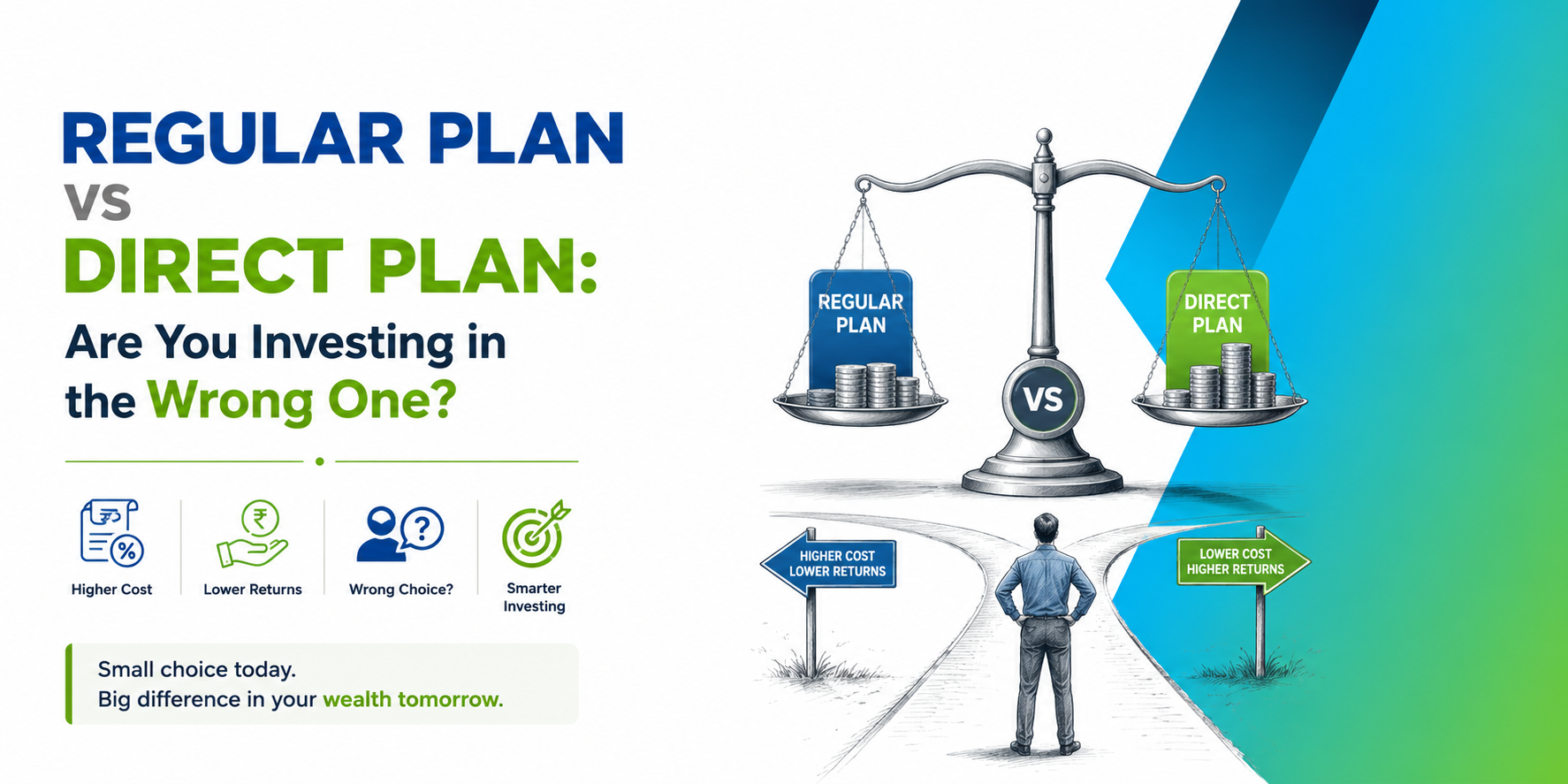
Direct investment in mutual funds is easier than ever. Thanks to the growth of online platforms. But a lot of investors quickly learn that lower costs don’t always mean higher returns.

We’ll look at both methods in this blog so you can choose the one that works best for your financial goals. You can also look into Wealth Wisdom’s professional wealth advisory services if you want expert advice.

What is Direct Investment in Mutual Funds?

Direct investment means putting money into mutual funds without the help of a middleman or a mutual fund advisor.

You:

  • Select funds on your own
  • Use AMC websites or apps to invest.
  • Keep an eye on your portfolio and adjust it as needed.

These are called direct mutual fund plans, which come with lower expense ratios since no commission is involved.

It may seem like a good deal, but it takes a lot of financial knowledge and self-control.

What Does A Mutual Fund Advisor Do?

A mutual fund advisor helps you understand mutual funds and make good investment choices.

They typically:

  • Understand your financial goals
  • Recommend suitable mutual funds
  • Create a diversified investment portfolio
  • Monitor and rebalance your investments
  • Guide you during market ups and downs

When you get help from an advisor, you put your money into regular plans, and a little extra fee is added to that.

Professional investment advisors and wealth advisory services focus on long-term growth, risk management, and goal-based planning.

Direct Investing vs Mutual Fund Advisor

FactorDirect InvestingMutual Fund Advisor
CostLowerSlightly higher
Expertise RequiredHighLow
Time CommitmentHighMinimal
Risk of MistakesHigherLower
GuidanceNoneProfessional
Emotional ControlSelf-managedAdvisor support

Pros and Cons of Direct Investing

Advantages

  • Lower expense ratio
  • Full control over investment decisions
  • No dependency on third parties

Disadvantages

  • Requires in-depth financial knowledge
  • Time-consuming research
  • High chances of wrong fund selection
  • Making decisions based on sentiments during market volatility

A lot of investors don’t realize how hard it is to stay consistent without help.

Pros and Cons of Using a Mutual Fund Advisor

Advantages

  • Access to expert mutual fund advisory services
  • Goal-based financial planning
  • Saves time and effort
  • Better diversification and risk management
  • Helps avoid costly mistakes

Disadvantages

  • Slightly higher cost due to commission
  • Results depend on advisor expertise

With the right mutual fund advisor, the focus changes from just investing to making money in a smart way.

Which Choice Is Best For You?

Choose Direct Investing if:

  • You understand financial markets well
  • You can research and track investments regularly
  • You have time to manage your portfolio
  • You are confident handling risks independently

Choose a Mutual Fund Advisor if:

  • You are a beginner or intermediate investor
  • You want structured financial planning services
  • You don’t have time to manage investments
  • You want to avoid costly mistakes
  • You prefer expert guidance

Many investors like to work with professional investment advisors to make sure they stick to their plans and goals.

Mistakes Investors Make When They Don’t Get Assistance

People who choose to invest directly often:

  • Select funds based only on past performance
  • Ignore proper asset allocation
  • Panic during market downturns
  • Invest in trending funds without research
  • Lack a long-term strategy

These mistakes can significantly impact your wealth creation journey.

The Real Question: Cost vs Value

Most investors focus on one thing:
“Direct plans are cheaper”

But the real question is:
“Are you making better investment decisions?”

A professional advisor can:

  • Prevent costly mistakes.
  • Make your portfolio work better.
  • Make sure your investments are in line with your goals.

In a lot of cases, the extra cost of getting expert advice is worth it.

Conclusion

Investing is not just about saving costs – it’s about making the right decisions consistently.

  • Experienced investors who have the time and knowledge can use direct investing.
  • If you want to build wealth in a structured and stress-free way, mutual fund advisors are the best choice.

If you want to grow your money over the long term with clarity and confidence, getting professional help can make a big difference.

At Wealth Wisdom, our main goal is to help you reach your life goals by giving you personalized wealth and mutual fund guidance, as well as strategic financial planning.

Choosing between direct investing and a mutual fund advisor isn’t just about cost—it’s about having a strategy that aligns with your financial goals. Whether you’re planning for retirement, your child’s education, or long-term financial security, disciplined investing backed by a well-defined financial plan can make a meaningful difference

Asked Questions(FAQ’s)

1. Is it better to invest in direct mutual funds or through an advisor?

It depends on your experience. Direct funds have lower costs, but advisors help you make better decisions and avoid mistakes.

2. Do mutual fund advisors charge fees?

Most advisors earn through commissions in regular plans. Some may also charge separate advisory fees depending on their services.

3. Can I switch from regular to direct mutual funds later?

Yes, you can switch anytime, but you should consider exit loads, taxes, and overall portfolio strategy before making changes.

4. Are direct mutual funds always better than regular funds?

Not necessarily. While direct funds are cheaper, returns depend on how effectively you select and manage your investments.

5. Who should hire a mutual fund advisor?

Beginners, busy professionals, and individuals looking for financial planning and wealth advisory services should consider hiring an advisor.

6. What is the biggest risk of direct investing?

The biggest risk is making poor investment decisions due to lack of knowledge or emotional reactions, which can impact long-term returns.

Financial Planning: What It Really Means (And How to Start)

Financial planning concept showing budgeting, investments, savings, retirement planning, and wealth management for a secure financial future in 2026.

You can learn how to manage your money and build wealth over time by learning about financial planning. This is true whether you’re just starting out in your career or already making a lot of money.In this guide, we provide an explanation of everything you need to understand in a simple, understandable, and helpful way.

What Is Budgeting?

Financial planning is about keeping your money away so you can achieve your lifestyle goals. It is a way to maintain the vibe of your money, such as earnings, shared value, investments, financial savings, coverage policies, and your taxes.

A plan that shows the way to get there.


      • Where should you put your cash?

      • How can you reach your goal within eternity?

    Professional financial planners can help people create plans that are tailored to their interests, goals, and desired level of options.

    Why you should make a financial plan for 2026

    The world of finance has changed a lot in the last few years. Here are some reasons why it’s more important than ever to plan your finances:

    1. The rate of inflation is going up

    Inflation in India has been around 5–6% a year, which has made it harder to buy things over time.

    2. The cost of living is going up


        • Rent in cities goes up by 8–12% every year.

        • The cost of education is going up by 10–12% every year.

      It can be hard to keep up with these rising costs without the right  Financial Planning Services.

      3. The job market is changing

      Freelancing, starting your own business, and AI disruption have all made it less likely that you will always have a steady income. Planning your money helps keep things stable even when things are unclear.

      Key Parts of Planning Your Money

      1. Setting goals for your finances

      Making your financial goals clear:


          • In the short term, you need gadgets and an emergency fund.

          • In the medium term, you could buy a car or invest in a business.

          • Long-term: retirement and paying for kids’ school

        Financial Planning Services can help you make sure your investments are in line with these goals.

        2. Making a budget and keeping track of expenses

        A good budget makes sure the following:


            • Spending that is under control

            • A higher rate of savings

          3. Planning for Investments

          Choosing the right assets is very important:


              • Mutual funds

              • Shares

              • Fixed income instruments

              • Gold and property

            In the past, equity mutual funds in India have given investors 10–12% returns every year over the long term.

            Financial planners make sure that your portfolio is well-diversified and that it fits how much risk you are willing to take.

            4. Planning for insurance (risk management)

            It’s just as important to protect your money:


                • Insurance for a set amount of time

                • Insurance for health

                • Fund for emergencies

              Insurance is a must because a single hospital stay in India can cost ₹1–5 lakhs.

              5. Tax Planning

              Smart tax planning helps you save more:


                  • Section 80C (₹1.5 lakh off)

                  • ELSS funds

                  • Contributions to NPS

                Financial planning services can help you pay less in taxes in a legal and effective way.

                6. Planning for retirement

                Planning for retirement makes sure you can live on your own money.

                If you spend ₹40,000 a month right now, taking inflation into account:


                    • You might need ₹1.5–2 lakhs a month after 25 years.

                  To do this, you need to be disciplined with your money and plan for the long term with the help of financial planning services.

                  A Beginner’s Guide to Step-by-Step Financial Planning

                  Step 1: Get a handle on your money

                  List your:


                      • Income

                      • Expenses

                      • Debts

                      • Assets

                    Step 2: Make your goals clear

                    Define:


                        • Timeframe

                        • Needed amount

                      Step 3: Make a budget

                      You can use the 50-30-20 rule or make your own plan.

                      Step 4: Set up a fund for emergencies

                      Put away enough money to cover six months’ worth of bills.

                      Step 5: Start putting money into stocks early

                      Investing early means more money because of compounding.

                      Step 6: Look over and make changes

                      Check your financial plan every six to twelve months.

                      A lot of beginners use financial planning services to avoid making mistakes and stay on track.

                      The Most Recent Trends in Financial Planning for 2026

                      1. Investing with a goal

                      Investors now put their money into specific life goals instead of random ones.

                      2. Tools for digital financial planning

                      Planning is getting easier thanks to apps and robo-advisors.

                      3. Financial planning services that are tailored to you

                      Strategies that are made just for you.

                      4. Growth of Passive Investing

                      ETFs and index funds are becoming more popular.

                      Things to Stay Away from When Planning Your Finances


                          • Not getting started early

                          • Not paying attention to inflation

                          • Not having enough variety

                          • Not getting insurance

                          • Not getting help from Financial Planning Services

                        Advantages of Financial Planning Services


                            • A structured way to handle money

                            • Advice on investing from experts

                            • Better managing of risks

                            • Efficient taxes

                            • Reaching goals faster

                          Financial planning services help you stick to your budget and make tough financial decisions easier.

                          Conclusion

                          Planning your price range is the first step to living in a safe and pressure-relaxed existence. As the value chain becomes more complex in 2026, you won’t be able to create a dependent plan anymore. It must be done properly.

                          Every step is important, from tracking your daily rates to building your wealth over time. The sooner you start, the better your money should ultimately be.

                          With the help of an expert, you can reap your dreams faster and have a lot of money in the best opportunities. You need Wealth Wisdom. Our Financial Planning Services, which are run by experts, help people and families plan for a secure financial future.

                          Frequently Asked Questions (FAQs)

                          1. What is the main purpose of financial planning?

                          The main purpose is to help you manage your money effectively so you can achieve your life goals like buying a house, funding education, or retiring comfortably.

                          2. When should I start financial planning?

                          You should start as early as possible. The earlier you begin, the more you benefit from compounding and disciplined savings.

                          3. Do I need professional financial planning services?

                          While you can start on your own, professional financial planning services provide expert guidance, reduce risks, and help you make better financial decisions.

                          4. How much should I save every month?

                          A common rule is to save at least 20–30% of your income, but this can vary based on your goals and expenses.

                          5. What are the key elements of a good financial plan?

                          A good plan includes:


                              • Budgeting

                              • Goal setting

                              • Investment planning

                              • Risk management

                              • Tax planning

                              • Retirement planning

                            6. How often should I review my financial plan?

                            You should review your plan at least once every 6–12 months or whenever there is a major life change.

                            7. Is financial planning only for high-income individuals?

                            No, financial planning is important for everyone, regardless of income level. Even small, consistent efforts can create significant wealth over time.